Ladle management system RFID tracking for steel plants with real-time monitoring

Advanced Real-Time Ladle Tracking and Monitoring Solution

Our innovative ladle management system employs cutting-edge RFID sensor technology to track and monitor ladles in real-time throughout the entire steel production process. This intelligent ladle tracking system enhances operational efficiency, improves safety, and optimizes resource utilization in steel manufacturing environments.

Comprehensive Ladle Lifecycle Management for Steel Plants

The Ladle Management System (LMS) by Hind Industec provides complete visibility and control over ladle operations in steel plants. This advanced ladle monitoring system tracks every aspect of ladle lifecycle - from tapping through processing to maintenance - ensuring optimal utilization, reduced costs, and improved safety. Our RFID-based ladle tracking technology delivers real-time information on ladle location, status, temperature profiles, and maintenance requirements.

Key Capabilities of Our Ladle Automation System

This comprehensive ladle management system improves coordination between production units including converters, ladle furnaces, and casters. The system optimizes ladle utilization while reducing operational and maintenance costs through accurate, real-time monitoring and predictive analytics.

Key Features

  • Improves visibility of ladles by monitoring their movement on real-time basis
  • Optimizes ladle utilization and reduces operational and maintenance costs
  • Provides real-time ladle information for quick responses to operational challenges
  • Improves coordination between production units like converter, ladle furnace, and caster
  • Tracks maintenance activities in the Ladle Repair Shop
  • Monitors ladle temperature profiles and lining conditions
📈

Operational Benefits

  • Increase in number of heats served per day
  • Increase in heat weight per ladle
  • Reduction in ladle circulation time
  • Increase in ladle lining life
  • Enhanced scheduling efficiency
  • Improved safety through predictive maintenance

System Intelligence

  • Real-time location and status tracking of all ladles
  • Movement speed and lifecycle monitoring
  • Enhanced production planning with accurate status data
  • Reduced downtime through predictive analytics
  • Complete historical data for trend analysis
Equipments
Scheme
Features
Benefits
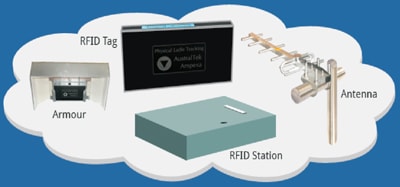
Ladle tracking system components including RFID tags and monitoring equipment

Real-Time Ladle Tracking System Technology

A real-time Ladle Tracking System (LTS) provides complete information on ladle operations including heat information, exact ladle position, ladle idle time, ladle life, exact contact time with hot steel, causes of delay and maintenance requirements. The ladle monitoring system detects exact arrival and departure time for each ladle at processing areas along with idle time analysis. From information supplied by the automation system, the LTS maps heat information, exact processing time and temperature profile for each ladle. The system captures all maintenance work performed on each ladle, providing clear understanding of ladle availability for future heats. Historical data helps supervisors analyze ladle profiles including ladle life, heat-wise history, and temperature profiles.

Passive RFID Tag Technology

The RFID tags used in our ladle management system are passive and utilize a modified form of the RFID reader's signal to transmit data. The tag reflects the RF signal transmitted by the reader and embeds its unique identification by modulating that reflected signal. The unique ID remains constant throughout the tag's lifetime. These tags can be read from several meters away without requiring line-of-sight with the reader. The system detection distance between sensors and antennas is optimized for steel plant environments, with effective range up to 30 meters.
RFID tags for ladle tracking system in steel plants

High-Temperature Protection Armor

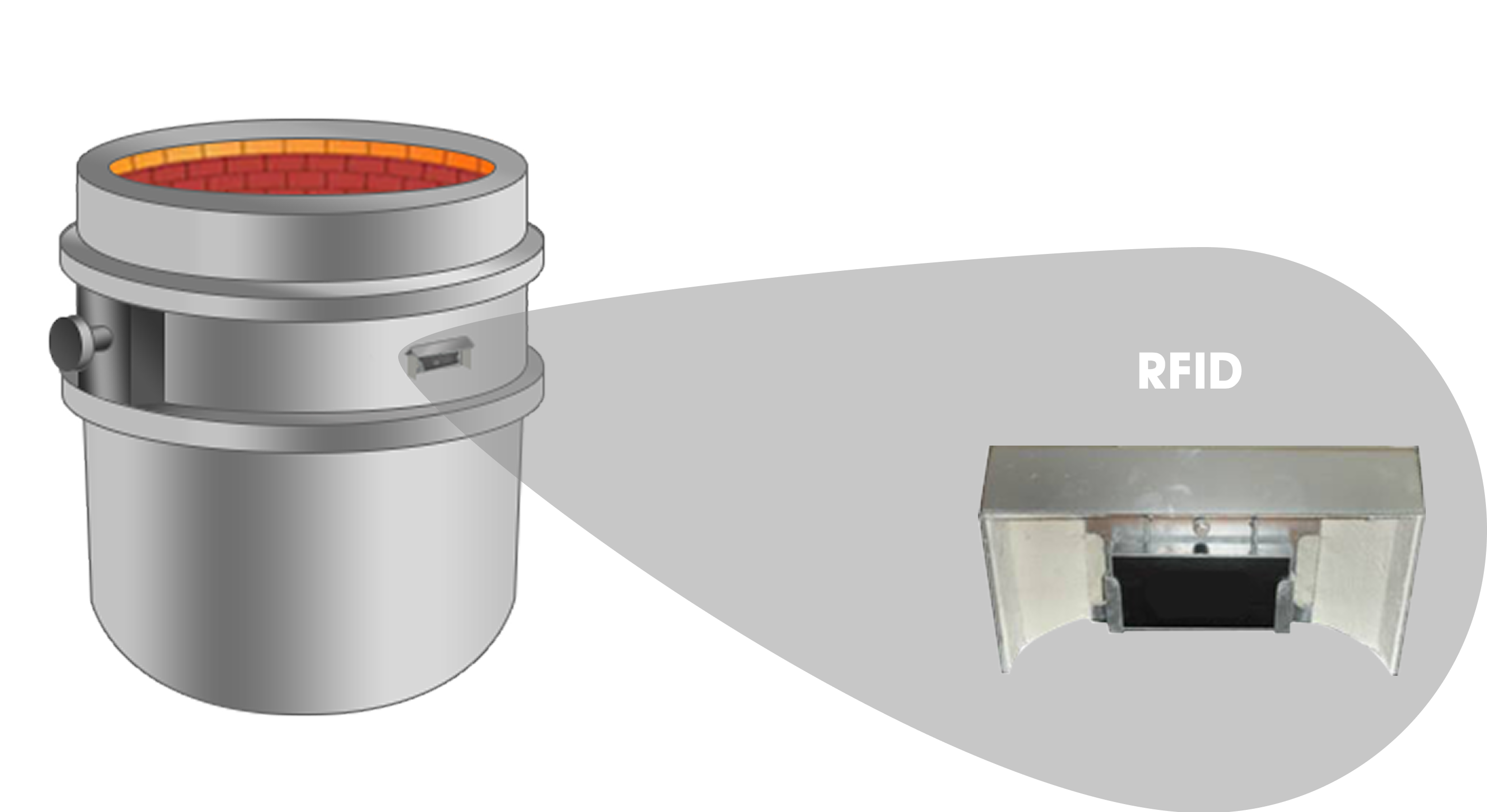
To protect RFID tags from high temperatures and collisions, tags are installed inside specialized protective covers called "armor" which are welded to the ladle wall. The armor location depends on ladle wall temperatures and optimal positioning to avoid collisions and signal interference. This protective armor maintains sensor temperature within working levels for correct data transmission while protecting from collision damage, hot metal splashes, and slag. The armor is manufactured from special steel with multiple insulation layers on the internal side where the RFID tag is located.

RFID Reader Stations

RFID readers are installed inside NEMA 12 enclosure stations that protect equipment from harsh steel plant environments. Stations feature forced ventilation to maintain RFID readers within working temperature ranges and include necessary electrical distribution for powering and protecting equipment. Each RFID reader can manage up to 4 different antennas, individually connected via coaxial cable. High gain directional antennas are oriented toward locations where ladles require detection.

Directional Antenna System

Antenna gain, measured in dBi (decibels relative to isotropic radiator), is selected based on cable length and maximum distance between antenna and ladle location. Typically 3dBi, 6dBi, 9dBi and 12dBi antennas are utilized. During installation, each antenna is carefully positioned, oriented and calibrated to cover defined plant areas called "spots." Typical spots in melt shops include tapping areas, cranes, ladle furnaces, ladle cars, caster turret arms, and pre-heaters.
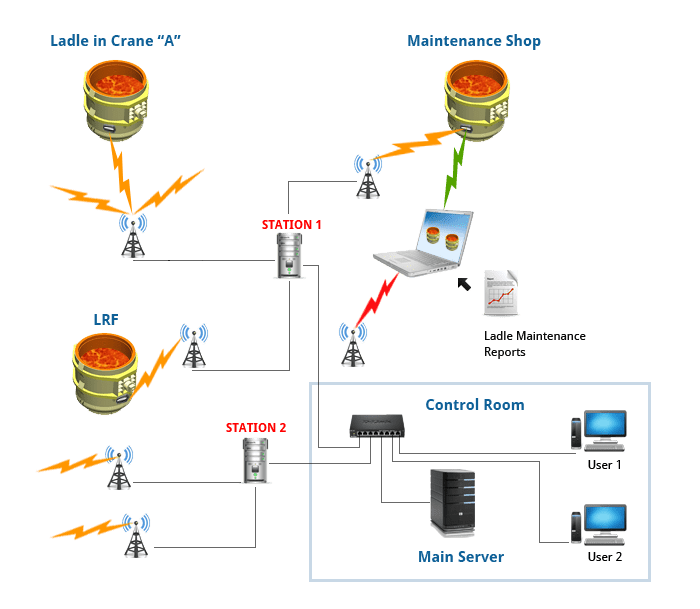
Ladle management system architecture and tracking scheme for steel plants
Ladle management system features and capabilities
  • Movement analytics: Travel time and ladle movement statistics
  • Plant visualization: Graphical plant mimic with real-time ladle movements
  • Thermal protection: High-temperature armor for RFID tags
  • Heat correlation: Track relationships between ladle, heat, and processes
  • Status monitoring: Real-time status of all supervised objects and alarms
  • Maintenance logging: Complete records of ladle maintenance operations
  • Comprehensive reporting: Idle times, empty times, travel times analysis
  • Scalable system: Expandable detection stations as per plant requirements
Key Performance Indicator Impact Direction Operational Result
Idle Time Decreased Optimized Increased Ladle Life & Reduced Maintenance
Availability Increased Enhanced Enhanced Scheduling
Visibility Real Time Live Better Decision Making
Thermal Profile Accurate Precise Prediction of Ladle Lining Temperature

Monitoring Features

  • Ladle recognition: Intelligent shape identification technology
  • Ladle identification: Individual ladle tracking and history
  • Ladle analysis: Temperature and condition monitoring
  • Real-time monitoring: Continuous operational surveillance
  • Temperature tracking: Thermal profile management
📈

System Benefits

  • Cost savings through maximized refractory lining service life
  • Improved safety for plant personnel through integrated monitoring
  • Long-term trending of surface temperature changes
  • Break-out prevention through early warning systems
  • Predictive and preventative maintenance programs

Monitoring Technology

  • Intelligent IR camera-based solution
  • Accurate and reliable measurements
  • Enhanced plant safety protocols
  • Automated monitoring capabilities
  • Integration with existing plant systems
Ladle Life Management
System Benefits

Intelligent Ladle Recognition

The software features integrated intelligent shape recognition technology configured to identify all ladle profiles used in the plant while excluding other elements. This ladle monitoring system ensures false alarms are not triggered by hot background objects. Data capture and analysis begins once the software confirms the presence of a ladle in the camera's field of view, providing accurate and reliable ladle tracking.

Ladle recognition technology using intelligent shape detection

Individual Ladle Tracking

The ladle management system stores temperature data for each individual ladle for long-term analysis and trending. Ladle identification comes from the integrated ladle tracking system, and based on ladle ID, temperature data from each thermal imaging camera is analyzed to provide comprehensive lifecycle management and predictive maintenance insights.

Individual ladle identification and tracking in steel plants

Advanced Thermal Analysis

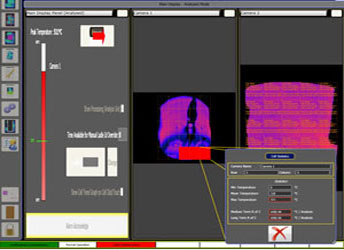
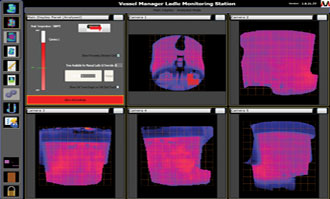
The ladle monitoring system features a fully configurable analysis system with an overlay grid on thermal images. Each grid cell provides minimum, maximum, and mean temperature for that area, along with rates of change, position, and camera identification. Live temperature data from each cell is compared with pre-configured alarm thresholds. Any discrepancy between live data and predefined limits raises an alarm, with the on-screen analysis grid clearly highlighting the location for immediate operator response.

Ladle management system benefits for steel plant operations

Comprehensive Benefits of Ladle Management System

  • Improved safety: Enhanced monitoring reduces accident risk
  • Break-out prevention: Early warning system alerts
  • Extended refractory life: Optimized ladle lining management
  • Refractory evaluation: Compare different lining materials
  • Problem detection: Identify critical areas quickly
  • Quality uniformity: Consistent refractory casting

Frequently Asked Questions About Ladle Management Systems

What is a ladle management system?

A ladle management system (LMS) is an RFID-based solution that provides real-time tracking, monitoring, and lifecycle management of ladles in steel plants. It tracks ladle position, status, temperature profiles, maintenance history, and operational metrics to optimize ladle utilization and reduce costs.

How does RFID ladle tracking improve steel plant operations?

RFID ladle tracking provides continuous visibility of all ladles, reduces idle time, improves coordination between production units, enables predictive maintenance, and extends ladle lining life. The system delivers real-time data for better decision-making and operational efficiency.

What are the key features of Hind Industec's ladle monitoring system?

Key features include real-time position tracking, temperature monitoring, maintenance scheduling, movement analytics, thermal profiling, predictive maintenance alerts, comprehensive reporting, and integration with plant automation systems. The system uses passive RFID tags protected by high-temperature armor.

How does ladle lifecycle management reduce costs?

Ladle lifecycle management optimizes ladle utilization, extends refractory lining life through proper temperature monitoring, reduces idle time, enables preventative maintenance, minimizes emergency repairs, and improves scheduling efficiency - all contributing to significant cost savings.

Can the ladle management system integrate with existing steel plant systems?

Yes, our ladle management system seamlessly integrates with existing MES, SCADA, and automation systems through standard protocols. It can exchange data with converters, ladle furnaces, casters, and maintenance management systems for comprehensive plant-wide coordination.

Home Email Us WhatsApp
Hind Indus Chat Support
Loading...

Loading chat support...